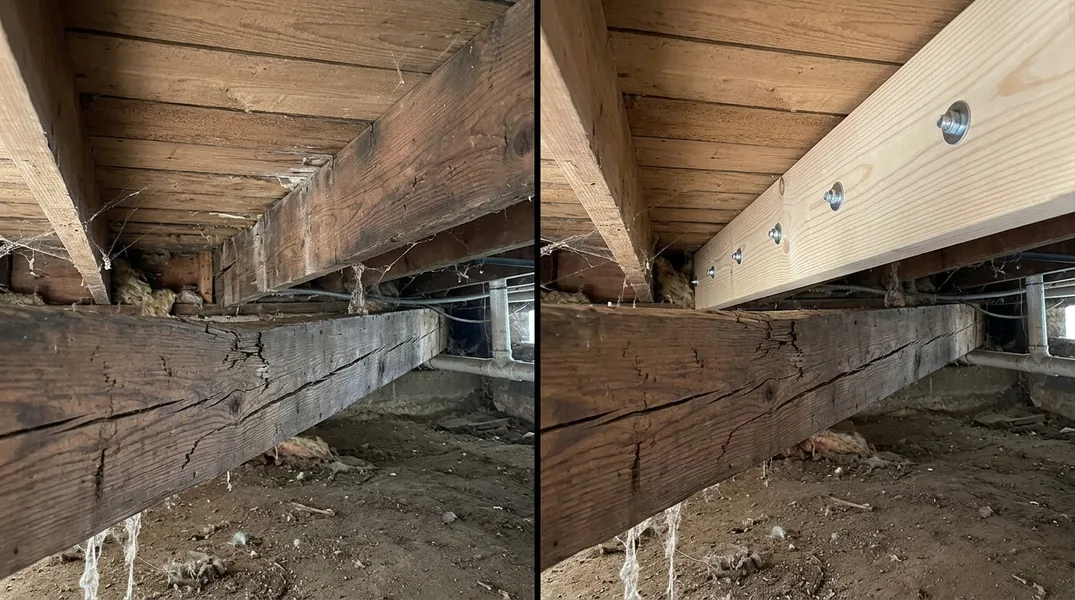
Why Is My Floor Sagging? Common Causes in Older Minneapolis Homes
If you own an older home in Minneapolis, you've probably noticed that certain rooms feel slightly tilted or uneven underfoot. That subtle sag in your floor is more than just an aesthetic quirk, it's a warning sign that your home's structural foundation needs attention. Understanding what causes sagging floors is the first step toward protecting your investment and ensuring your family's safety.
The most common culprit behind sagging floors is Wood Rot & Dry Rot Repair issues in the floor joists and subfloor. Minnesota's freeze-thaw cycles and moisture from basements create ideal conditions for wood decay. When joists weaken from rot, they lose their ability to support the weight of your floors and everything on them. Similarly, Termite Damage Repair can hollow out wood from the inside, creating the same structural failure. Other causes include inadequate support posts, failed basement beams, or simply the natural settling of very old homes built on unstable soil.
How Floor Joist Repair and Sistering Joists Work
When a Floor Joist & Subfloor Repair inspection reveals damage, the solution depends on the extent of the problem. For localized rot or moderate damage, sistering floor joists is one of the most effective repair methods. Sistering involves installing a new joist (or sometimes doubled lumber) alongside the damaged original joist, fastening them together securely. This process effectively doubles the strength of that section and restores proper support to the floor above.
The sistering process begins with removing any flooring, subflooring, and insulation to expose the damaged joist fully. A professional carpenter will assess whether the damage is limited to the top few inches or extends through the entire joist depth. If rot has penetrated deeply, the entire joist may need replacement rather than sistering. The new lumber is carefully fitted and bolted or lag-screwed to the existing joist at regular intervals. In some cases, temporary support posts are installed during the work to prevent further sagging and ensure worker safety. This method is particularly popular in Minneapolis because it's less disruptive than full joist replacement and often costs less while delivering lasting results.
When You Need Beam Replacement or Deeper Structural Work
Not all sagging floor problems can be solved with sistering joists alone. If the damage extends to the main support beams in your basement or crawlspace, or if multiple joists are severely compromised, you may need Beam Replacement & Load-Bearing Wall Removal services. These are more complex projects that require temporary support structures, careful engineering, and often permits from the city of Minneapolis.
A sagging floor that affects an entire room or runs across multiple joists suggests a systemic problem, usually involving the central beam or support posts that carry the weight of the entire house. Rust on steel beams, wood rot on wooden beams, or inadequate post support can all cause widespread sagging. In these cases, a structural engineer or experienced carpenter will design a repair plan that may involve installing new steel beams, replacing rotted posts, or adjusting the home's load distribution. These repairs are more involved and take longer, but they address the root cause and prevent future problems.
Sagging Floor Repair Cost in Minneapolis: What to Budget
The pricing for sagging floor repair varies widely depending on the scope of damage and the repair method chosen. A simple sistering joist project on one or two joists might cost between $1,500 and $3,500, while more extensive repairs affecting multiple joists or requiring beam work can easily exceed $5,000 to $15,000 or more. These estimates include labor, materials, temporary support, and any necessary permits.
Several factors influence the final cost. First, accessibility matters, the easier it is for workers to reach the damaged joists, the faster the job goes and the less it costs. Second, the extent of damage determines whether you need sistering, full joist replacement, or beam work. Third, if the damage is caused by ongoing moisture or pest issues, addressing those root causes (like improving drainage or treating termite infestations) adds to the project scope. Finally, older homes sometimes require custom solutions because framing sizes and spacing don't match modern standards. Rather than guessing at costs, the best approach is to request a free estimate from Minneapolis Carpentry. We'll send a carpenter to inspect your floor, identify all problem areas, and provide a detailed quote based on your specific situation. You can reach us at (612) 441-4671 to schedule an inspection.
Signs You Need Professional Help Now
Some homeowners live with minor floor sag for years without realizing the risk. However, certain warning signs mean you should call a professional immediately. If your floor sags noticeably in one spot, if doors or windows are sticking, if you see visible cracks in the floor or subfloor, or if you detect a musty smell in the basement or crawlspace, these are red flags. Soft or spongy spots in the floor when you walk on them indicate active wood rot, which will only worsen with time and moisture.
The longer you wait to address sagging floors, the more expensive the repair becomes. Ongoing moisture damage spreads rot to adjacent joists, and the weight distribution changes as one area fails, stressing other parts of your home's structure. Cracks can develop in walls and ceilings, and in severe cases, the floor can fail suddenly, creating a safety hazard. If you've noticed any of these signs in your Minneapolis home, don't delay. Contact Minneapolis Carpentry for a professional assessment and repair plan that will restore your home's structural integrity.
Preventing Future Sagging: Maintenance Tips for Homeowners
Once your sagging floor has been repaired, taking steps to prevent future problems will extend the life of your repair and protect your home. The primary enemy of floor joists is moisture. Keep your basement or crawlspace dry by ensuring gutters and downspouts direct water away from your foundation. Install a sump pump if water collects during heavy rains. Use a dehumidifier in damp spaces to keep humidity below 60 percent, which discourages both wood rot and termites.
Regular inspections are equally important. Walk your basement or crawlspace at least once a year, looking for signs of new rot, pest activity, or moisture. Check that support posts are sitting firmly on solid footings and haven't shifted. If you see any soft wood, staining, or signs of insects, address it immediately before it spreads. Finally, keep your home well-ventilated and maintain proper grading around your foundation so water flows away rather than pooling near your house. These simple steps, combined with professional repairs when needed, will help keep your Minneapolis home's floors strong and level for decades to come.
Looking for a professional carpentry contractor in Minneapolis? Minneapolis Carpentry responds fast for all your carpentry needs.
Get a Free QuoteOur services: Wood Rot & Dry Rot Repair · Termite Damage Repair · Floor Joist & Subfloor Repair