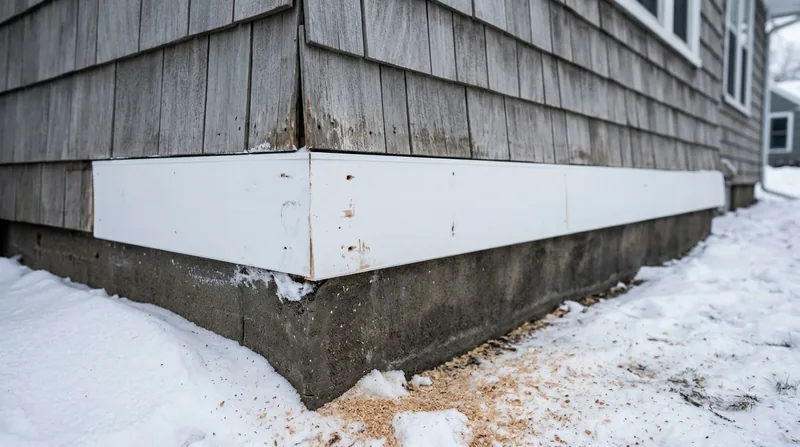




Minneapolis homeowners face a relentless enemy every spring: freeze-thaw cycles that split siding, heave foundations, and rot framing from the inside out. The city's century-old bungalows, American Foursquares, and Tudor Revivals in Kingfield, Tangletown, Kenwood, and Linden Hills were built to last, but Minnesota's brutal continental climate takes its toll on wood. Wood rot and dry rot repair in Minneapolis is not cosmetic work, it is structural preservation. We cut out decayed wood around windows, trim, sills, and framing on the city's historic stock, treat what remains, and rebuild with rot-resistant lumber. This is permanent repair, not a patch that fails again in five years.
Why Wood Rot and Dry Rot Repair Matters in Minneapolis's Historic Homes
Minneapolis's flat glacial terrain and oak, elm, and maple canopy create a beautiful streetscape, but that same moisture-rich environment accelerates wood decay. The annual freeze-thaw cycle cracks paint seals, allows water into framing, and then freezes that moisture solid, pushing it deeper into the wood. Dry rot follows: fungal decay that spreads along the grain and weakens structural members long before you see soft spots on the outside. Window frames, sill plates, rim joists, and exterior trim are the first casualties. Left unaddressed, rot migrates to floor joists and subfloor, threatening the integrity of your home.
- We identify rot by probing with a sharp tool, looking for soft spots and checking moisture levels inside the wood.
- We remove all decayed material and treat the remaining wood with a borate-based preservative to stop fungal growth.
- We rebuild with pressure-treated or naturally rot-resistant lumber, sized and fitted to match the original framing.
- We seal all new wood and repaint exterior surfaces to prevent water intrusion and restart the decay cycle.
- We document the work for your insurance claim if the damage qualifies for coverage under your homeowner's policy.
This systematic approach stops rot at the source and restores the structural soundness of your home without unnecessary replacement.
Key info: Minneapolis building code requires that structural repairs to framing, floor joists, and load-bearing walls be done to current code and may require a permit. Check with the Minneapolis Building Inspections Division before starting work on concealed framing or load-bearing members. We help coordinate permits and work with inspectors to ensure compliance.
How We Repair Wood Rot and Dry Rot in Minneapolis Homes
Our process begins with a careful inspection to map the extent of decay and identify the source of moisture. We do not guess or estimate by sight alone. We probe, we measure moisture, and we explain what we find before we cut a single board. Once we understand the scope, we remove all soft wood, treat the surrounding framing, and rebuild with materials matched to the original construction. For a bungalow in South Minneapolis with rotted window trim, that means Douglas fir casing and redwood sill stock. For a Foursquare with a compromised rim joist in Linden Hills, that means pressure-treated lumber sistered to the existing frame or full replacement if the damage is too deep. Every job is different because every house is different.
- We isolate the work area and remove all decayed wood back to solid material, leaving no soft spots or hidden pockets of rot.
- We treat the exposed wood with a borate preservative that penetrates the grain and stops fungal growth without toxic fumes.
- We install new lumber, cut and fitted to match the original dimensions and grain orientation, then secure it with galvanized or stainless fasteners.
- We seal all joints and exterior surfaces with exterior-grade caulk and paint to prevent water re-entry and protect the new wood.
- We verify the repair by visual inspection and moisture testing to confirm the wood is stable and the moisture source is controlled.
The result is a repair that lasts decades, not a temporary fix that masks the problem.
Example: A homeowner in Armatage called us about soft trim around a second-story window. We found that ice dams and failed caulking had allowed water to run behind the exterior casing and soak the window frame and adjacent wall studs for two winters. We removed 18 linear feet of rotted casing and trim, treated the studs with preservative, and installed new Douglas fir casing with proper flashing and sealed joints. The repair cost $1,400 and took two days. Replacement of the entire window assembly would have cost three times as much and been unnecessary.
See our related service for floor joist and subfloor repair if rot has spread to structural members below your living spaces.
| Approach | Description | Best for |
|---|---|---|
| Localized wood removal and rebuild | Cut out decayed section, treat remaining wood, install new lumber fitted to match original stock and dimensions. | Window trim, sill plates, fascia, soffit, and small sections of exterior casing where rot is confined and structure is sound. |
| Sistering and reinforcement | Install new pressure-treated lumber alongside existing framing, bolted or lag-screwed to carry load alongside the compromised member. | Floor joists, rim joists, and structural beams where decay is moderate and the existing frame can still share the load. |
| Full member replacement | Remove entire rotted joist, beam, or stud and install new pressure-treated or engineered lumber, secured to bearing points and properly sized. | Severely decayed floor joists, sill plates, and load-bearing studs where sistering is not structurally adequate or space does not allow it. |
| Moisture control and preventive sealing | Install proper flashing, caulk all joints, paint exterior surfaces, and address drainage or gutter issues that allowed water into the wood. | All repairs, as a final step, to prevent reinfection and extend the life of the repair indefinitely. |
Wood Rot and Dry Rot Repair Cost in Minneapolis: What to Expect
Wood rot repair in Minneapolis starts at around $650 for small, localized damage such as rotted window trim or a short section of sill plate. That baseline covers the work of removing decayed wood, treating the surrounding framing, installing new lumber, and sealing the repair. From there, cost rises with the extent of decay, the accessibility of the damaged area, the type of wood required, and whether structural members are involved. A rotted rim joist running 20 linear feet may cost $2,200 to $3,500 depending on how much of the joist is compromised and whether the subfloor above needs reinforcement. Full replacement of a sill plate on a side of a house can run $3,000 to $5,000 or more if the foundation is uneven or the house sits low to the ground and access is tight. Large structural repairs involving floor joists or beams require an on-site estimate because load-bearing work often needs a structural engineer and a permit, and those variables shift the scope and cost significantly.
The best way to understand cost for your home is to get two or three estimates from carpenters who will probe the damage, measure moisture, and explain what they find before quoting a price. Avoid contractors who give estimates over the phone or based on photos alone. Wood rot is invisible until you open it up, and a thorough inspection is the only honest way to price the work. Our estimate is free and we respond within 24 hours at (612) 441-4671.
See our full pricing overview for more detail on factors that affect cost and how we structure estimates for larger jobs.
Wood Rot and Dry Rot Repair Near Me: What Minneapolis Homeowners Should Know When Hiring a Carpenter
Hiring a carpenter to repair wood rot is a decision that affects your home's structural integrity and resale value. The right contractor brings field knowledge, honesty about what needs repair versus replacement, and the skill to match new wood to old. Here is what to look for when vetting carpenters near Minneapolis for this work.
Verify insurance and credentials. Ask for a certificate of insurance showing general liability and workers compensation coverage. We are fully insured and can provide proof of coverage on request. Do not hire an uninsured contractor, no matter how cheap the bid. If someone gets hurt on your property or property damage occurs, you are liable.
Check references and past work. Ask for the names and phone numbers of three recent customers and call them. Ask whether the work was completed on time, whether the contractor explained the scope clearly, and whether the repair has held up. References matter more than any online review because you are talking to real homeowners in your city.
Understand permit requirements. Structural repairs to framing, floor joists, rim joists, and load-bearing walls often require a permit from the Minneapolis Building Inspections Division. Some contractors try to avoid permits to save money and time, but unpermitted work can affect your home's insurability and your ability to sell. We pull permits where required and work with inspectors to ensure your repair is code-compliant.
Get the estimate in writing. A good estimate describes the scope of work, the materials being used, the labor cost, and the timeline. It should also note whether permits are required and who is responsible for pulling them. Do not accept a verbal estimate or a handshake deal.
Ask about HOA rules if you live in a community with deed restrictions. Some Minneapolis neighborhoods and associations have rules about exterior materials, colors, or the type of work that can be done without approval. Check your CC and Rs before signing a contract, and let your carpenter know if restrictions apply.
Ready to move forward? Contact us for a free estimate and we will walk you through the inspection and repair plan for your home.
Wood Rot & Dry Rot Repair in Minneapolis: Pricing Guide
| Service | Price | Details |
|---|---|---|
| Small localized rot repair | Starting at $650 | Window trim, sill plate sections, fascia, or small exterior casing areas where decay is confined and structural members are sound |
| Medium-scale repair | Starting at $1,400 | 20 to 40 linear feet of exterior trim, partial rim joist, or multiple window frames affected by freeze-thaw damage |
| Large structural repair | Starting at $2,500 | Full sill plate sections, extensive floor joist damage, or load-bearing wall framing requiring sistering or member replacement and permit |
| Structural engineering and complex jobs | On estimate | Load-bearing repairs, beam replacement, or foundation-level work often require a structural engineer, permit, and site-specific assessment |
| Travel | Included | No separate call-out fee or mileage charge within Minneapolis and surrounding service areas |
| Free estimate | No charge | Response within 24 hours, detailed inspection, no obligation to book, call (612) 441-4671 |
Indicative pricing, the exact cost depends on square footage, finish, and site access. Free personalized estimate within 24h at (612) 441-4671.


