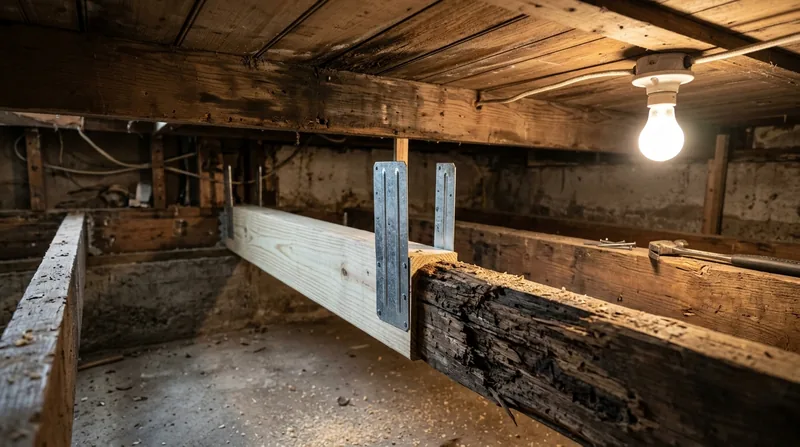




Floor Joist & Subfloor Repair in Minneapolis addresses one of the most common structural problems in the city's aging housing stock. Minneapolis' brutal freeze-thaw cycles, heavy snow loads, and persistent moisture from spring snowmelt create ideal conditions for wood decay in the framing beneath your floors. Sagging, bouncy, or uneven floors in Powderhorn duplexes, Seward rambler basements, and South Minneapolis Craftsman bungalows almost always trace back to compromised joists or rotted subfloor sections. We sister sound joists to damaged ones, replace sections that have lost structural integrity, and rebuild subfloor to restore level, solid floors. The work is straightforward carpentry, but getting it right means the difference between a floor that lasts another century and one that continues to settle and fail. Call us at (612) 441-4671 for a free estimate, or read on to understand what's happening beneath your feet and how we fix it.
Why Floor Joist & Subfloor Damage Matters in Minneapolis' Freeze-Thaw Climate
Minneapolis sits on flat glacial terrain with lakes, parkways, and a continental climate that produces some of the nation's coldest winters alongside hot, humid summers. That cycle of deep freeze and rapid thaw, combined with the city's heavy spring snowmelt, drives moisture into rim joists, sill plates, and subfloor sections. Wood that stays damp in spring doesn't dry out before the next freeze arrives. Over years, that moisture breaks down the cell structure of Douglas fir and oak joists, turning them soft and weak. A joist that has lost 30 to 40 percent of its cross-section to rot can no longer carry its share of the floor load, and the floor begins to sag and bounce. This is not a cosmetic issue: a damaged joist system eventually forces the entire floor to work harder, cracking drywall upstairs and stressing other framing members.
- Moisture from snowmelt and spring rain penetrates rim joists and sill plates in basements and crawl spaces across the Twin Cities.
- Repeated freeze-thaw cycles crack wood fibers and accelerate rot, especially in joists that span from exterior walls inward.
- Sagging floors and soft spots in the subfloor are the first sign that joists have lost load-carrying capacity.
- Addressing damaged joists early prevents secondary damage to walls, doors, and finishes upstairs.
Early repair or replacement of compromised joists stops the decay cycle and restores the structural foundation of your home.
Local example: A 1920s Craftsman in Kingfield with a damp basement crawl space had three joists along the north rim that were soft to a depth of 2 inches. We sistered new 2x8 Douglas fir alongside each damaged joist, fastened them with 16d nails spaced 16 inches on center, and the floor became solid and level again. The original joists were left in place and the repair cost far less than full replacement.
For more information on wood decay and repair strategies, see our page on Wood Rot & Dry Rot Repair. If you suspect structural damage related to a pest inspection report, our Termite Damage Repair page explains how we work from your pest control findings.
How We Repair Floor Joists & Subfloor: Our Process in Minneapolis
We begin with a site visit to assess the extent of the damage, the species and size of the joists, and whether the rot is localized or systemic. We use a moisture meter and a sharp awl to probe the wood and determine how much sound material remains. Once we understand the scope, we explain whether repair (sistering) makes sense or if the joist should be replaced entirely. For sagging floors, we work with a level and sometimes temporary shoring to restore the floor to its original plane before finishing goes back down. Our crew does the same work from job to job, so you know exactly who is working on your home.
- We assess the damage with a moisture meter and probe tool, identifying the depth and extent of rot in each joist.
- We install temporary shoring or support posts to carry the floor load safely while we work.
- For localized damage, we sister a new joist (or joist section) alongside the damaged one, fastening with 16d nails on 16-inch centers.
- For widespread rot or loss of more than 40 percent of the joist cross-section, we remove the damaged joist and install a new one of matching species and dimension.
- We replace any rotted subfloor sections with new plywood or dimensional lumber, matching the original thickness and fastening pattern.
- We level the floor using a laser level or straightedge, adjusting shims or jacking as needed.
- We remove temporary supports once the new joists and subfloor are fully fastened and the floor is level and stable.
The floor is then ready for flooring, carpet, or other finishes to be installed on a solid, level base.
Local example: A post-war rambler in Richfield had a bouncy kitchen floor and visible sag over a 12-foot span. We found two joists with rot along the rim and one with a knot hole that was letting moisture through. We sistered two new joists, replaced the rim joist section, and sealed the knot hole from below with epoxy. The floor came level, and the homeowner avoided a full floor replacement.
Learn more about structural carpentry and framing repairs on our Framing & Structural Carpentry page. For larger projects that involve load-bearing walls or major beam work, see Beam Replacement & Load-Bearing Wall Removal.
Floor Joist & Subfloor Repair Methods: Sistering vs. Replacement
| Approach | Description | Best for |
|---|---|---|
| Sistering | Install a new joist of matching dimension and species alongside the damaged joist, fastened with 16d nails on 16-inch centers. | Joists with rot less than 40 percent of cross-section, localized damage, or where the original joist still carries some load. |
| Full Joist Replacement | Remove the damaged joist entirely and install a new one in its place, fastened to the rim and beam on both ends. | Joists with rot exceeding 40 percent of cross-section, multiple point loads, or where the joist is cracked or severely compromised. |
| Subfloor Patching | Cut out rotted subfloor sections and install new plywood or dimensional lumber, fastened to the joists below with nails or screws. | Localized rot in subfloor, soft spots, or areas where water damage is confined to the top surface layer. |
| Full Subfloor Replacement | Remove all subfloor over a room or section and install new plywood, fastening to all joists and rim joists below. | Widespread rot, water damage across large areas, or when the subfloor is no longer flat or structurally sound. |
| Rim Joist & Sill Plate Repair | Sister or replace the rim joist and sill plate where they meet the foundation or band board, sealing moisture entry points. | Moisture intrusion, rot at the perimeter, or when interior joists are sound but the rim is compromised. |
Floor Joist & Subfloor Repair Cost in Minneapolis: What to Expect
Floor Joist & Subfloor Repair in Minneapolis typically starts at $1,800 for a localized repair involving one or two joists and a small subfloor patch. The final cost depends on the number and length of joists involved, whether you choose sistering or full replacement, the accessibility of the space, and the current condition of the rim and sill plate. A full subfloor replacement across a large room or basement section can run significantly higher, but most residential jobs fall between $2,500 and $6,000. We recommend getting two or three estimates from local carpenters so you can compare scope, method, and price. Our estimate is free and comes with no obligation to book, and we respond within 24 hours.
Several factors directly affect the cost of your repair:
- The number of joists that need repair or replacement determines labor time and material quantity.
- Whether the space is a basement, crawl space, or above-grade affects access, safety requirements, and the difficulty of shoring.
- The presence of utilities (plumbing, electrical, HVAC) running through the joists may require rerouting and adds cost.
- The extent of subfloor damage and whether you need patching or full replacement in the affected area.
- The species and dimension of the original joists, which we must match when sistering or replacing.
See our full pricing page for detailed breakdowns by service type and complexity.
Floor Joist & Subfloor Repair Near Me: What Minneapolis Homeowners Should Know When Hiring a Carpenter
When you're looking for a carpenter to repair floor joists and subfloor in Minneapolis or the surrounding suburbs, focus on three things: experience with structural carpentry, the ability to explain what's wrong and why, and a willingness to repair rather than replace whenever the wood justifies it. A good carpenter will probe the damage, show you the extent of the rot, explain whether sistering or replacement makes sense, and give you a clear estimate before work begins. Ask for references from recent jobs in your neighborhood, check that the contractor is fully insured, and verify that they understand local building code and permit requirements.
Key points when hiring:
- Confirm that the contractor is fully insured and can provide a certificate of insurance.
- Ask whether the work will require a permit from the Minneapolis Building Department, and ensure the contractor is prepared to pull it.
- Get references from at least two recent jobs in Minneapolis or a nearby suburb, and call them.
- Request a written estimate that breaks down the scope, method, materials, labor, and timeline.
- Clarify whether the contractor will handle temporary shoring and site safety, or if you need to hire a separate structural engineer for complex loads.
Structural work such as replacing multiple joists or altering load-bearing walls commonly requires a permit and may require a licensed structural engineer to size the replacement members and verify load capacity. Requirements vary by jurisdiction, so confirm with the Minneapolis Building Department before work begins. Contact us for a free estimate and we will discuss permit requirements and next steps with you.
Floor Joist & Subfloor Repair in Minneapolis: Pricing Guide
| Service | Price | Details |
|---|---|---|
| Single joist sistering (localized rot) | Starting at $1,800 | One joist repaired with sistering, including shoring, fastening, and subfloor patching in that section |
| Multiple joists or full joist replacement | Starting at $2,800 | Two to four joists sistered or replaced, subfloor patching, and floor leveling across affected area |
| Rim joist and sill plate repair | Starting at $2,200 | Sistering or replacing rim joist and sill plate section, moisture sealing, and interior joist ties |
| Large subfloor replacement (100+ sq ft) | On estimate | Full subfloor removal and replacement over basement or crawl space requires site assessment for joist condition and access |
| Travel and estimate | Free | No travel charge within Minneapolis and surrounding areas; free estimate with response within 24 hours |
Indicative pricing, the exact cost depends on square footage, finish, and site access. Free personalized estimate within 24h at (612) 441-4671.


