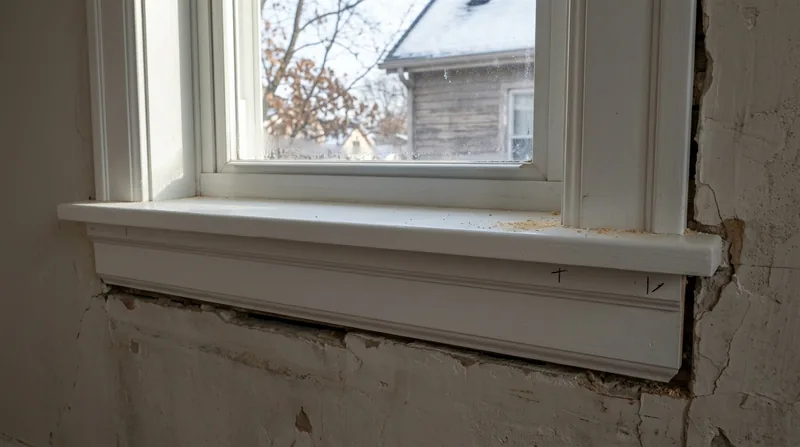




Finish & Trim Carpentry in Minneapolis demands precision that separates real craft from handyman work. The historic wood-frame homes scattered across South Minneapolis, craftsman bungalows in Kingfield and Tangletown, grand Tudors around the Chain of Lakes in Kenwood, and post-war ramblers across the suburbs, all depend on tight miters, scribed joints, and trim that fits the way the original carpenters built it. Minnesota's brutal freeze-thaw cycles and century of settlement mean that interior trim takes real punishment: seasonal wood movement, foundation settling, and the hard reality that plaster and old framing shift constantly. Getting casing, baseboard, crown molding, and custom paneling right requires understanding how wood moves with humidity, how to read a room's geometry, and the patience to make each joint speak. We do that work every day.
Why Finish Carpentry Matters in Minneapolis Historic Homes
The neighborhoods that define Minneapolis, from the Arts District in Northeast to the lakeside elegance of Linden Hills, were built when finish carpentry meant something. Original casing, baseboards, and crown molding set the character of a room. Over a century, those details wear, crack, shrink, and sometimes need replacement or repair. More often, they need resetting or replication to match what was there. Interior trim also protects walls and framing from moisture, directs seasonal air movement, and hides the rough framing underneath. Bad finish work looks cheap and unfinished. Good finish work is invisible, it just looks right.
- We match existing trim profiles and wood species when repair or extension is the honest answer, using hand tools and scribing to fit irregular walls.
- We install new casing, baseboard, crown molding, and wainscoting to period-appropriate detail and modern building standards.
- We build and install custom shelving, built-in cabinets, and architectural millwork that fits the geometry of your specific room.
- We handle interior door casing, jamb repair, and threshold work so doors hang true and finish details frame them properly.
- We work around plaster, old lath, settling framing, and out-of-square walls, the real conditions of old Minneapolis homes, without forcing trim into gaps.
Finish carpentry is the visible craft. It's what people notice when they walk into a room, and it's what determines whether a renovation looks thoughtful or rushed.
Local example: A Kenwood homeowner wanted to restore original oak casing in a 1920s Tudor but the plaster walls were wavy and the openings were out of square by nearly half an inch. We scribed and fitted new casing to the actual wall geometry, matched the original profile using a hand plane, and stained it to blend with existing trim. The work took longer than forcing stock casing into gaps, but the room now reads as it was meant to.
For guidance on Minneapolis building standards and finish work in historic homes, the City of Minneapolis maintains resources on residential construction practices and historic preservation.
How We Approach Finish & Trim Carpentry in Minneapolis Homes
Every finish carpentry job starts with reading the room. We measure wall angles, check for plumb and level, identify existing trim profiles and wood species, and understand what the original carpenter intended. Then we plan the work: whether we're repairing existing trim, extending it into new areas, or building something from scratch. Wood movement is constant in Minnesota, seasonal humidity changes can shift trim by a quarter-inch or more. We account for that in every joint. Scribing, coping, and fitting to the actual wall (not the theoretical wall) is how we make trim look built-in rather than added-on.
- We measure and document existing trim profiles, wood species, and finish details before proposing repair or replacement work.
- We scribe and fit all trim to actual wall geometry, accounting for plaster irregularities, settling, and seasonal wood movement.
- We use hand tools, chisels, planes, files, coping saws, to make joints tight and transitions seamless.
- We sand, stain, and finish all work to match existing trim or to your specification and the home's character.
- We install all trim with fasteners appropriate to the substrate and concealed where possible, using construction adhesive where needed for long-term stability.
The goal is work that looks intentional, fits the room, and lasts as long as the house does. That requires patience and skill, not speed.
Concrete example: A St. Paul homeowner in a 1940s rambler had removed a wall to open the kitchen. The new opening needed casing that matched the existing trim in the rest of the home. We sourced Douglas fir matching the original, profiled it on a shaper to match the existing casing profile, fit it to the new opening (which was slightly out of square), and stained it to blend seamlessly. The work took three days; the result reads as original.
For more on how we handle structural and framing work that often accompanies finish carpentry, see our page on Framing & Structural Carpentry.
| Approach | Description | Best for |
|---|---|---|
| Repair & replication | Match and extend existing trim profiles, wood species, and finishes using hand tools and careful scribing to fit irregular walls and openings. | Historic homes where original detail must be preserved or extended; rooms with out-of-square walls and settling framing. |
| New casing & baseboard | Install painted or stained casing, baseboard, and threshold trim to new openings, door frames, and renovated spaces using stock or custom profiles. | Kitchen and bathroom remodels, new door and window openings, room additions where trim detail must be consistent with the home's character. |
| Crown molding & wainscoting | Install crown molding at ceiling lines with coped inside corners and scribed fits to out-of-level ceilings; build and install wainscoting panels with rail, stile, and cap. | Formal dining rooms, living rooms, and libraries where architectural detail adds character; ceilings that are out of level or walls that are out of plumb. |
| Custom built-ins & shelving | Design and build built-in cabinets, shelving, and architectural millwork fitted to the specific geometry and character of the room. | Alcoves, window seats, library shelving, and cabinet work where stock solutions don't fit the space or the home's period detail. |
| Door & stair trim | Install interior door casing and jambs, repair stair trim and newel details, and handle threshold work so doors operate smoothly and trim reads as intentional. | Doors that don't close properly due to settling, stair trim that's cracked or loose, and threshold work where old framing has shifted. |
Finish & Trim Carpentry Cost in Minneapolis: What to Expect
Finish carpentry pricing depends on the scope, complexity, and material. A straightforward baseboard or casing installation starts at around $550 to $800 for a single room or a few linear feet of trim, including material and labor. Custom crown molding, scribed to an out-of-level ceiling, costs more. Building and installing custom shelving or wainscoting runs higher, typically $1,500 to $3,500 depending on the room size, detail, and finish. The biggest variables are how much hand work the geometry demands (scribing and fitting to irregular walls costs more than running straight trim), whether you're matching existing profiles (which requires profiling work or custom milling), and the finish (stain and polyurethane costs more than paint).
Travel is included in all estimates across Minneapolis and the surrounding service area. We provide a free, no-obligation estimate within 24 hours. The best approach is to get 2 to 3 estimates so you understand the range and the reasoning behind each bid. Call us at (612) 441-4671 or visit our full pricing overview for detailed breakdowns by service type.
Finish & Trim Carpentry Near Me: What Minneapolis Homeowners Should Know When Hiring
Finding a finish carpenter who understands old homes and takes pride in detail work is harder than it sounds. Many contractors treat trim as an afterthought. We treat it as the visible craft it is. When you're evaluating carpenters near Minneapolis, look for someone who will take time to understand your home's original detail, explain why certain joints or profiles matter, and show you examples of scribed work and tight miters. Ask about their approach to wood movement and seasonal changes. Get references from homeowners in homes similar to yours, a 1920s Tudor in Kenwood or a 1950s rambler in Bloomington. Ask to see finished work in person if possible. The cheapest bid often reflects the least attention to detail; the best bid reflects experience and craft.
- Confirm that your contractor is fully insured and holds a current Minnesota DLI Residential Building Contractor license, which you can verify on the Minnesota Department of Labor and Industry website.
- Ask for 2 to 3 references from homeowners in homes similar to yours, and call them to ask about the quality of trim work and how it has held up.
- Get written estimates from at least 2 contractors so you understand the scope, materials, and timeline, and can compare the reasoning behind each bid.
- If your home is in a historic district or subject to HOA design guidelines, confirm that your contractor understands those restrictions and will work within them.
- Discuss the finish schedule upfront: will trim be stained or painted, and by whom, and what timeline is realistic for drying and final inspection.
Good finish carpentry takes time. Rushing leads to gaps, misaligned joints, and work that shows its haste. A contractor who schedules carefully and explains the timeline is one who cares about the result.
Ready to discuss your finish carpentry project? Contact us for a free estimate or call (612) 441-4671 to talk through your needs.
Finish & Trim Carpentry in Minneapolis: Pricing Guide
| Service | Price | Details |
|---|---|---|
| Baseboard or casing installation | Starting at $550 | Single room or 20-30 linear feet of trim, including material, labor, and finish work |
| Crown molding with coped joints | Starting at $750 | Full room installation with inside coped joints and scribed fits to out-of-level ceilings; price increases with room perimeter |
| Custom built-ins, shelving, or wainscoting | Starting at $1,500 | Fitted shelving, window seats, or wainscoting panels; cost depends on room size, detail level, and whether matching existing profiles |
| Door casing, jamb repair, or stair trim | Starting at $400 | Single door or stair section; complex repairs involving plaster patching or profile matching cost more |
| Travel and estimate | Included and free | No separate mileage fee in Minneapolis and surrounding service areas; free estimate within 24 hours, no obligation |
Indicative pricing, the exact cost depends on square footage, finish, and site access. Free personalized estimate within 24h at (612) 441-4671.


