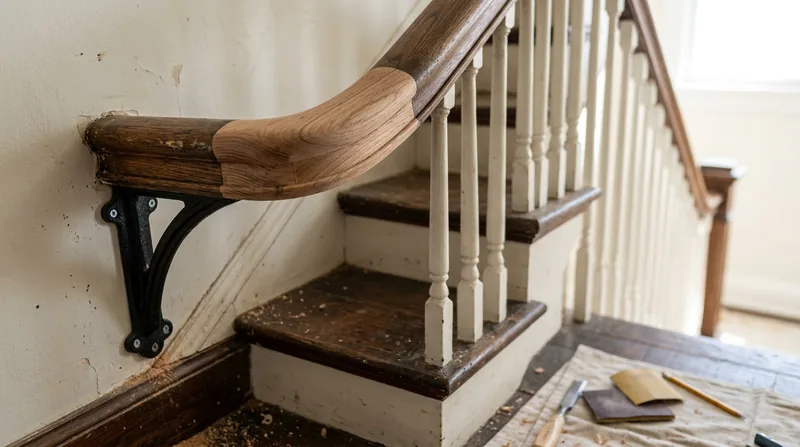




Stair & Railing Repair in Minneapolis keeps the most-used pathways in your home safe and functional. Squeaky treads, loose balusters, and wobbly railings develop fast in the city's century-old Craftsman bungalows, Foursquares, and rambler homes, where wood movement from freeze-thaw cycles and seasonal moisture swings stresses joinery year after year. A sagging stair stringer or a railing that shifts underfoot isn't just annoying, it's a fall risk and a sign that the underlying structure needs attention. We repair and rebuild staircases, restore period railings, and install code-compliant handrails and attic ladders across Minneapolis and the surrounding metro area.
Why Stair and Railing Repair Matters in Minneapolis Homes
Minneapolis homes built before 1960 have stairs that have settled and shifted with the foundation, the freeze-thaw heave of sill plates, and decades of foot traffic. Interior staircases in Kingfield, Tangletown, Armatage, and Northeast Minneapolis often show loose treads, cracked stringers, and railings that no longer sit plumb. Exterior stairs on porches and decks deteriorate faster, especially on north-facing exposures where moisture lingers longer and wood stays damp through spring. A stair that moves underfoot is a liability, and a railing that doesn't meet current code puts you at risk with homeowners insurance and with anyone who uses the stairs.
- We inspect stringers, treads, risers, and handrails to identify loose fasteners, cracked wood, and structural settlement.
- We repair squeaky treads by securing fasteners and shimming treads to the stringer from underneath.
- We rebuild or reinforce stringers that have split or sagged, sistering new wood or replacing the entire assembly when repair is not safe.
- We install new railings and balusters to match existing period trim or to meet current code for height, spacing, and load capacity.
- We install attic ladders, pull-down stairs, and ship-ladder access to finished attics and storage spaces.
Repairing a stair early stops the wobble from spreading to the newel post and the adjoining floor framing.
Minneapolis Building Code: Stairs must have handrails 34 to 38 inches above the nosing of the tread, balusters spaced no more than 4 inches apart, and a load capacity of 200 pounds per linear foot. The Minneapolis Building Department issues permits for stair alterations and modifications. A free estimate includes a code review and advice on what must be permitted.
For more information on structural carpentry and how wood moves in Minnesota's climate, see our page on Framing & Structural Carpentry.
How We Repair Stairs and Railings in Minneapolis: Our Process
We start with a site visit to measure the stair, assess the stringers and treads, and test the railing for movement and play. We photograph the existing condition and check for rot, splits, and fastener failure. If the stringer is sound, we often repair rather than replace, saving cost and preserving the original character of older homes. We discuss code requirements, get permits if needed, and provide a detailed estimate before work begins.
- We assess the stringer and tread assembly for movement, splits, and fastener failure using a level and a probe to test for soft wood.
- We remove the existing railing and balusters if replacement is needed, preserving any original newel posts or trim that justifies restoration.
- We reinforce or sister the stringer with new stock, securing the new member with lag bolts and epoxy to ensure a rigid bond.
- We install treads and risers, shimming and fastening from underneath to eliminate squeaks and ensure a tight fit.
- We build and install new railings and balusters to code, scribing and coping joints to match existing trim profiles where the style calls for it.
- We test the finished stair for movement, racking, and code compliance, and we address any punch-list items before final walkthrough.
A typical interior stair repair in a Kenwood or Linden Hills home takes 3 to 5 days, depending on whether the stringer requires reinforcement or full replacement.
Local example: A Craftsman bungalow in Powderhorn had a front porch stair with a cracked stringer and loose treads. The original Douglas fir stringer was solid underneath the crack, so we sistered a new stringer alongside it, tied the two together with lag bolts, and rebuilt the treads. Cost was $2,100. A full replacement would have run $3,800.
For more on how we approach structural wood repair and reinforcement, visit our Wood Rot & Dry Rot Repair page.
Stair and Railing Repair Methods and Materials
| Approach | Description | Best for |
|---|---|---|
| Tread and fastener repair | Secure loose treads by shimming underneath and driving new fasteners through the stringer, then filling the old fastener holes. | Squeaky treads and minor movement when the stringer is solid. |
| Stringer sistering | Install a new stringer alongside the original, bonding with epoxy and lag bolts to reinforce a cracked or sagging member without full replacement. | Cracked stringers, minor sag, and homes where preserving the original structure matters. |
| Full stringer replacement | Remove the existing stringer and install new, building to the original pitch and tread depth, then secure treads and risers to the new member. | Severely rotted, split, or sagging stringers where sistering is not structurally adequate. |
| Railing and baluster installation | Build new railings and balusters to code, securing to the newel post and stringer with mortise-and-tenon joinery or bolted brackets, finishing to match existing trim. | Missing or unsafe railings, code compliance, and period restoration work on older homes. |
| Attic ladder installation | Install folding or pull-down stairs and handrails to attic or storage space, securing the frame to the ceiling joists and ensuring safe clearance and headroom. | Access to finished attics, storage rooms, and loft spaces where a permanent stair is not practical. |
Stair and Railing Repair Cost in Minneapolis: What to Expect
A basic tread and railing repair in Minneapolis starts at $600 for securing loose fasteners and shimming treads on a short interior stair. A full stringer sistering job runs $1,800 to $3,200, depending on the length of the stair and whether the treads need replacement. Full stringer replacement and railing installation typically cost $3,500 to $6,500 for a full flight with new balusters and newel post. Attic ladder installation runs $400 to $900. The main factors that affect cost are the length and pitch of the stair, the condition of the stringers and treads, whether the railing is original and worth preserving, and whether the job requires a permit.
We recommend getting 2 to 3 estimates so you can compare the scope of repair versus replacement and understand what's included in each quote. A free estimate includes a site inspection, photographs, and a written summary of what we recommend and why. For a full pricing overview and to discuss your specific situation, visit our pricing page.
Stair & Railing Repair Near Me: What to Look for When Hiring a Carpenter in Minneapolis
A qualified carpenter for stair and railing work should understand load paths, code requirements, and how to preserve original trim in older homes. Ask to see examples of previous stair work, check references from homeowners in your neighborhood, and confirm that the contractor is fully insured and carries workers compensation. Stairs and railings are safety-critical, so the person doing the work matters as much as the estimate. We recommend asking about permits, understanding whether the scope includes code review, and getting clarity on the timeline before you book.
- Confirm that the contractor is fully insured and carries general liability and workers compensation coverage.
- Ask for references from at least two previous stair or railing projects in Minneapolis or the surrounding area.
- Verify that the contractor understands Minneapolis Building Code requirements for handrail height, baluster spacing, and load capacity.
- Discuss whether the job requires a permit and who handles the application and inspection.
- Get a written estimate that lists materials, labor, timeline, and what is and is not included.
- Ask whether the contractor will preserve original trim and newel posts if the home is older and the style justifies restoration.
When you're ready to move forward, call us at (612) 441-4671 for a free, no-obligation estimate. We'll walk through the repair options, discuss cost, and explain what the Minneapolis Building Department requires. Visit our contact page to schedule a site visit or to ask questions by email.
Stair & Railing Repair in Minneapolis: Pricing Guide
| Service | Price | Details |
|---|---|---|
| Tread and fastener repair | Starting at $600 | Securing loose treads, shimming, and driving new fasteners when the stringer is structurally sound and repair is adequate |
| Stringer sistering and tread rebuild | Starting at $1,800 | Reinforcing a cracked or sagging stringer with a new member, bonding with epoxy and lag bolts, rebuilding or securing treads |
| Full stringer replacement and railing installation | Starting at $3,500 | Complete stringer replacement, new treads and risers, new railings and balusters to code, finishing and trim installation |
| Attic ladder and pull-down stair installation | Starting at $400 | Folding or pull-down stairs to attic or storage space, securing to joists, handrail installation, headroom and safety compliance |
| Travel and site inspection | Included | No separate charge for travel within Minneapolis and surrounding metro areas, site inspection included in free estimate |
| Free estimate | No obligation | Site visit, photographs, written summary of recommended repairs, and cost range within 24 hours at (612) 441-4671 |
Indicative pricing, the exact cost depends on square footage, finish, and site access. Free personalized estimate within 24h at (612) 441-4671.


