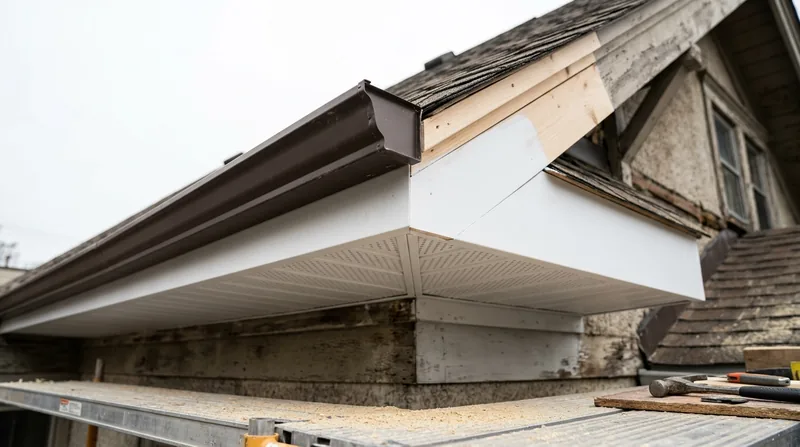




Peeling paint on your fascia, soft boards underfoot on the soffit, and gaps where the trim has pulled away from the house, these are the early warnings that fascia, soffit and exterior trim repair work is overdue in Minneapolis. The freeze-thaw cycles that define a Minnesota winter are relentless: water gets behind the trim, freezes solid, expands, and splits the wood. By spring, the damage is visible. In a city where craftsman bungalows line the streets of South Minneapolis, where Kenwood mansions overlook the Chain of Lakes, and where post-war ramblers dot the suburbs from Edina to Maple Grove, the roofline takes the hardest hit. We replace fascia, soffits and exterior trim with primed, rot-resistant material, closing the gaps that let snowmelt and pests into the roofline before the damage spreads deeper into the framing.
Why Fascia, Soffit and Trim Fail in Minneapolis: The Freeze-Thaw Story
Minneapolis sits on flat glacial terrain under one of the continent's harshest climates. Winter temperatures plummet well below zero, and the spring thaw brings repeated cycles of freezing and thawing that no material can ignore. Fascia and soffit boards, typically made of wood or composite, sit at the roofline where snowmelt runs and collects. Water penetrates the paint, seeps into the end grain, freezes, and splits the board from the inside out. Unlike wood rot in a basement joist, which develops over years, freeze-thaw damage happens visibly and fast. The first sign is usually peeling paint or a soft spot when you press on the board with a screwdriver.
- Peeling or blistering paint indicates water has penetrated the wood and is lifting the finish from below.
- Soft or spongy fascia and soffit boards mean freeze-thaw cycles have fractured the wood fiber, and rot is beginning.
- Gaps between trim boards and the house wall allow snowmelt to run directly into the wall cavity and behind the siding.
- Insect entry points open when trim separates, giving carpenter ants and other pests a direct route into the house structure.
- Compromised gutters and downspouts lose their seal when the fascia they're attached to warps or rots.
Left unaddressed, soft fascia and soffits let water migrate into the rafter tails, rim joists, and wall framing, where it triggers wood rot and structural decay that costs far more to repair.
Key info: In Minneapolis neighborhoods like Kingfield, Tangletown, and Northeast Minneapolis, many homes are 80 to 120 years old with original wood fascia and soffit. These boards were never designed to survive modern snow loads and repeated thaw cycles. Replacement with primed, rot-resistant material is the only durable solution.
For more on how water damage spreads through the home's exterior, see our guide to wood rot and dry rot repair.
How We Replace Fascia, Soffit and Exterior Trim in Minneapolis
We start with a careful inspection of the existing boards, checking how far the damage has spread and whether the underlying rafter tails or rim joists are sound. If the fascia is soft but the framing is solid, we remove the old boards and install new material with proper flashing and sealant to block water entry. We work from the ground or a ladder, and we coordinate with your gutter system so downspouts and gutters sit flush against the new trim. Our process is straightforward and leaves no gaps for water or pests to exploit.
- We inspect the fascia, soffit, and trim from ground level and from a ladder to identify all soft, peeling, or separated areas.
- We remove old trim boards and soffits, exposing the rafter tails, rim joists, and wall framing so we can assess the condition of the underlying structure.
- We repair or replace any compromised framing members using sistered joists or new lumber where necessary.
- We install new fascia, soffit, and trim with a primer coat and proper flashing to shed water away from the wall and roof cavity.
- We seal all joints and fastener holes with exterior-grade caulk to prevent water penetration.
- We coordinate the new trim with your existing gutter system, ensuring a clean, water-tight seal.
A typical single-story home in Edina or Richfield might have 150 to 250 linear feet of fascia and soffit. A two-story colonial in Linden Hills or a Tudor Revival in Kenwood can run 300 to 400 feet or more. The job timeline depends on the extent of rot and whether framing repairs are needed.
Example: A 1920s bungalow in South Minneapolis with peeling fascia and soft soffit on the north side. We removed 80 linear feet of old wood, found soft rafter tails, sistered in new lumber, and installed primed fascia, soffit, and drip edge. Total time: two days. The homeowner had a complete, sealed roofline that will handle the next 20 years of Minnesota winters.
For related structural work, see framing and structural carpentry.
Fascia, Soffit and Exterior Trim Repair Methods and Materials
| Approach | Description | Best for |
|---|---|---|
| Primed pine or fir fascia and soffit | Solid wood, factory-primed, sealed with exterior caulk and paint on site. Light, affordable, and traditional. | Homes where appearance and durability matter equally, and budget is moderate. |
| Primed composite fascia boards | Engineered wood-fiber composite, pre-primed, resists rot and splintering. Heavier than solid wood, requires secure fastening. | High-moisture areas and homes where long-term paint-free durability is the priority. |
| Aluminum trim and flashing | Lightweight, never rots, requires no paint. Can be formed to match existing trim profiles or gutters. | Homes with aluminum gutters or where minimal maintenance and long life are essential. |
| Sistered rafter tails and rim joists | New solid wood lumber bolted alongside damaged rafter tails or rim joists to restore structural capacity without full removal. | Situations where the framing is sound but surface damage is moderate, preserving the original structure. |
| Full rafter tail or rim joist replacement | Complete removal and replacement of damaged framing members with new lumber, then new fascia and soffit installed. | Extensive rot or structural compromise where sistering is not sufficient or not practical. |
We recommend primed solid wood or composite for most Minneapolis homes because it matches the character of the existing structure and performs well under Minnesota conditions when properly maintained with paint every five to seven years.
Fascia, Soffit and Exterior Trim Repair Cost in Minneapolis: What to Expect
Fascia, soffit and exterior trim repair in Minneapolis typically starts at $700 to $1,200 for a single-story home with light damage on one or two sides. The cost climbs based on the total linear footage, the extent of rot in the underlying framing, and whether rafter tails or rim joists need repair or replacement. A two-story colonial or a rambler with damage on multiple sides can easily run $2,500 to $4,500 or more. Material choice matters too: solid wood is less expensive than composite, and aluminum trim costs more upfront but lasts longer without paint.
The biggest cost driver is framing damage. If we open up the soffit and find soft or rotted rafter tails, we have to repair or replace them before installing new trim. That adds labor and lumber, but it's the only way to stop water from continuing to damage the house. We always explain what we find and give you the honest choice between repair and replacement.
Get two or three estimates before deciding. Each contractor may propose different materials or repair strategies, and comparing them helps you understand what's really needed. We provide a free estimate within 24 hours. Call (612) 441-4671 or visit our pricing page for a full breakdown of what affects the cost.
Cost example: A 1950s rambler in Bloomington with 200 linear feet of peeling fascia and soft soffit on the north and east sides, plus minor rafter tail damage. Estimate: $2,100 to $2,600 for primed pine fascia, new soffit, sistered rafter tails, and new drip edge. Same job with composite fascia: $2,800 to $3,300.
Fascia, Soffit and Exterior Trim Repair Near Me: What Minneapolis Homeowners Should Know When Hiring
Hiring the right carpenter for fascia and soffit work is straightforward if you know what to look for. You want someone who will inspect the framing carefully, explain what they find without pressure to upsell, and use quality materials with proper flashing and sealant. Check that the contractor is fully insured and ask for references from recent jobs in your neighborhood. Fascia and soffit work does not usually require a building permit in Minneapolis, but if framing repair is extensive, the Minneapolis Building Department may require one. It's worth a quick call to confirm before work starts.
- Verify that the contractor is fully insured with liability and workers compensation coverage, and ask to see the certificate.
- Ask for at least two references from homeowners in Minneapolis or nearby suburbs who had fascia or soffit work done in the past two years.
- Get a written estimate that lists the linear footage of fascia and soffit, the materials being used, and labor cost separately.
- Confirm whether a permit is needed by checking with the Minneapolis Building Department if framing repair is part of the scope.
- Ask how the contractor will protect your landscaping and roof during the work, and whether gutters will be removed and reinstalled or worked around.
- Clarify the timeline and whether the job includes a final coat of paint or if that's a separate step.
We've been doing this work in Minneapolis since 2016, and we hold an MN DLI Residential Building Contractor Certificate. We're fully insured, and we're happy to provide references and a free estimate. Contact us anytime at (612) 441-4671.
Fascia, Soffit & Exterior Trim Repair in Minneapolis: Pricing Guide
| Service | Price | Details |
|---|---|---|
| Single-story home, light damage | Starting at $700 | Peeling fascia or soft soffit on one side, 80 to 120 linear feet, no framing repair needed |
| Two-story home or multiple sides | Starting at $1,800 | 200 to 300 linear feet of fascia and soffit, minor rafter tail damage, primed wood material |
| Extensive rot or framing repair | On estimate | Soft or rotted rafter tails, rim joists, or sistering required; scope must be inspected to price accurately |
| Composite or premium materials | Add 25 to 40 percent | Engineered composite fascia or aluminum trim costs more upfront but lasts longer and requires less maintenance |
| Travel and free estimate | Included | No call-out charge or mileage fee within Minneapolis and surrounding service areas |
Indicative pricing, the exact cost depends on square footage, finish, and site access. Free personalized estimate within 24h at (612) 441-4671.


