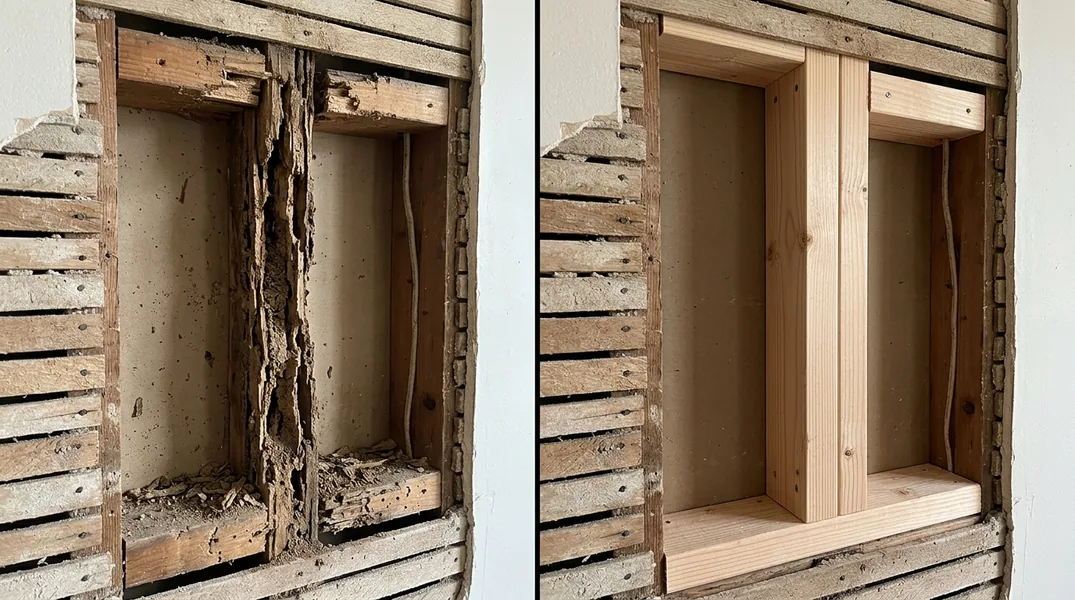
Understanding Dry Rot vs Ice-Dam Damage
Minnesota winters are brutal on homes, and Minneapolis homeowners face two particularly common wood-damaging problems: dry rot and ice-dam damage. While both can lead to serious structural issues, they have very different causes, progression patterns, and repair requirements. Knowing the difference is the first step toward protecting your home and avoiding costly mistakes.
Dry rot is a fungal decay that spreads through wood when moisture levels remain consistently high, typically above 20 percent. Ice-dam damage, by contrast, occurs when melted snow refreezes at the roof edge, creating a barrier that forces water back under shingles and into your home's structure. Understanding which problem you're facing will help you prioritize repairs and prevent further deterioration. If you're unsure what you're dealing with, the team at Minneapolis Carpentry can help you identify the issue and recommend the right solution.
What Does Wood Rot Look Like: Identifying Dry Rot
Dry rot presents itself in ways that are often unmistakable once you know what to look for. The affected wood typically appears dark brown or reddish and becomes brittle, crumbling easily when you press on it with a screwdriver or similar tool. You may also notice a musty smell, which is the telltale odor of fungal growth. In advanced stages, the wood shrinks and cracks in a distinctive cubic or blocky pattern, as if it's been cut into small squares. Paint and varnish may also peel or bubble over the affected area.
The progression of dry rot is often faster than people expect. What starts as a small patch in a basement rim joist or crawl space can spread to multiple areas within months if moisture conditions persist. Dry rot typically appears in areas with poor ventilation, inadequate drainage, or chronic moisture problems. Common locations include basement walls, attic framing, window sills, and areas around plumbing penetrations. Early detection is crucial because Wood Rot & Dry Rot Repair is far less expensive when caught in its initial stages.
Recognizing Ice-Dam Roof Damage: What to Look For
Ice-dam damage manifests differently than dry rot and often appears more suddenly. When ice dams form along your roofline, water backs up behind the dam and seeps under shingles, through the roof deck, and into the attic or interior walls. The first signs are usually water stains on ceilings or walls, often appearing in a line that corresponds to where the roof meets the exterior wall. You may notice peeling paint, discoloration, or even active dripping during thaw cycles. Unlike dry rot, ice-dam damage is often visible from the outside: you'll see thick ice buildup along the eaves and icicles hanging from gutters.
The damage from ice dams can affect multiple layers of your home's structure. Water may penetrate the roof sheathing, insulation, drywall, and framing all at once. This creates an ideal environment for mold growth and subsequent dry rot development, which is why ice-dam damage left unaddressed can eventually lead to the fungal decay problems associated with dry rot. In Minneapolis, where winter temperatures regularly dip well below freezing and snow accumulation is heavy, ice dams are an annual concern for many homeowners.
Key Differences: Wood Rot Causes vs Ice-Dam Origins
The root causes of these two problems are fundamentally different, which is why prevention strategies differ too. Dry rot develops from ongoing moisture issues: poor basement drainage, roof leaks, plumbing problems, condensation in crawl spaces, or inadequate ventilation. It's a chronic condition that develops slowly over time. The fungus responsible for dry rot needs consistent moisture and relatively warm temperatures to thrive. Once the moisture source is eliminated, dry rot stops spreading, though the damaged wood must still be replaced.
Ice-dam damage, conversely, is a seasonal phenomenon tied directly to winter weather patterns. It occurs when warm air from inside your home escapes through the roof, melting snow on the upper portions of the roof. That meltwater runs down the roof and refreezes at the colder eaves, creating a dam. The dam traps more meltwater, which backs up under the shingles. Ice dams are less about the condition of your roof and more about the thermal dynamics of your attic and the severity of winter weather. Proper attic insulation and ventilation can reduce ice-dam formation, while dry rot prevention focuses on moisture control and drainage.
How to Distinguish Between the Two: A Homeowner's Checklist
Here's a practical approach to identifying which problem you're facing. First, look at the timing and location of the damage. Dry rot typically appears in areas with chronic moisture issues: basements, crawl spaces, areas under leaks, or poorly ventilated spaces. Ice-dam damage appears seasonally, usually in late winter or early spring, and is concentrated along the roofline and eaves. If you see damage only during winter or immediately after a thaw, ice dams are likely the culprit. If the damage is year-round and in low-moisture areas like basements, think dry rot.
Next, examine the wood itself. Dry rot wood is crumbly, dark, and often exhibits that distinctive cubic cracking pattern. It may also have a white or gray fungal growth visible on the surface. Ice-dam damage typically shows up as water stains, soft or spongy wood, and mold growth, but the wood hasn't necessarily developed the advanced decay characteristics of dry rot. However, if ice-dam water damage has persisted for weeks or months, it can eventually lead to dry rot development. When in doubt, contact Minneapolis Carpentry for a professional inspection. Call (612) 441-4671 or request a free estimate to have a carpenter assess the damage and recommend the appropriate repairs.
Wood Rot & Dry Rot Repair Near Me: When to Call a Professional
Both dry rot and ice-dam damage require professional attention, though the urgency and scope of work differ. Dry rot is a progressive problem that will continue to worsen as long as moisture persists. If you suspect dry rot in your home's structural elements, such as floor joists, rim joists, or roof framing, it's important to act quickly. Floor Joist & Subfloor Repair may be necessary if the decay has affected your home's foundation support system. Delaying treatment can lead to serious structural compromise and dramatically higher repair costs.
Ice-dam damage should also be addressed promptly, especially if water has entered your home's interior. The longer water sits in walls, attics, and insulation, the greater the risk of mold growth and secondary damage. A professional carpenter can assess the extent of the damage, identify whether the structural framing has been compromised, and determine if Beam Replacement & Load-Bearing Wall Removal or other structural repairs are needed. Minneapolis Carpentry has extensive experience with both types of damage and can guide you through the repair process with a clear timeline and transparent pricing.
Looking for a professional carpentry contractor in Minneapolis? Minneapolis Carpentry responds fast for all your carpentry needs.
Get a Free QuoteOur services: Wood Rot & Dry Rot Repair · Termite Damage Repair · Floor Joist & Subfloor Repair